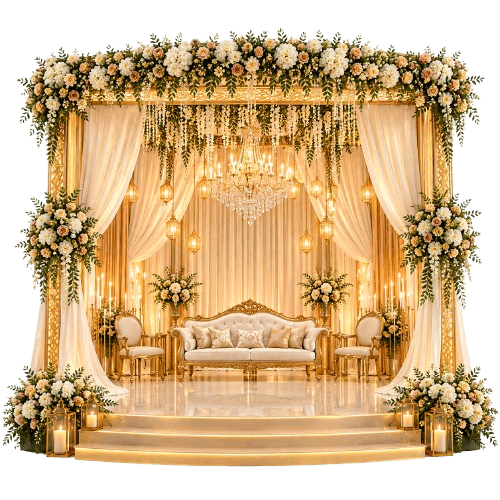
Nikah Decoration
Nikah decoration is about creating an appropriate, elegant setting for the Nikah ceremony. Unlike some other wedding events that might emphasize elaborate design or extensive color work, a Nikah ceremony typically calls for decoration that is refined, respectful of the occasion, and focused on creating a welcoming, formal atmosphere.
Professional Nikah decoration involves understanding the nature of the ceremony, the venue, the preferences of the couple and their families, and how to style the space in a way that feels appropriate, coordinated, and intentional. The decoration should support the ceremony’s formality while reflecting the couple’s personal style.
What Nikah Decoration Includes
Nikah decoration typically covers several key areas of the ceremony venue:
Main Ceremony Area and Backdrop
The ceremony area, where the couple sits during the Nikah, is the focal point. The backdrop and surrounding decoration should create a formal, dignified setting. This might include fabric draping in elegant colors, floral arrangements positioned strategically, or decorative elements that frame the ceremony space without creating visual clutter.
Unlike some other wedding events, Nikah decoration often emphasizes simplicity and refinement rather than abundant ornamentation. The design should allow clear visibility of the couple and the ceremony itself.
Entrance and Guest Reception Area
Guests arrive and enter through a decorated entrance. This area sets expectations for the ceremony and creates a welcoming atmosphere. The entrance might include subtle decorative elements, an arch, or simple floral arrangements that hint at the color scheme and theme inside.
The entrance should be proportional to the walkway and should not obstruct guest flow. It should feel formal and appropriate without appearing overly elaborate.
Guest Seating and Venue Layout
The Nikah venue needs to accommodate seated guests who will observe the ceremony. The seating arrangement, available space, and how the room is laid out all affect how decoration is distributed throughout the space.
Table styling, wall decoration, and how the overall venue is coordinated contribute to a cohesive look. The decoration should enhance the venue without making it feel cluttered or distracting from the ceremony itself.
Floral Accents and Decorative Details
Floral elements are typically more restrained in Nikah decoration than in some other wedding events. Rather than dense, elaborate arrangements, flowers might be used as accents in specific areas, near the ceremony space, along the entrance, or in focal areas.
Fresh or artificial flowers can be used depending on preference and duration. The flower selection and placement should coordinate with the overall color scheme and feel of the ceremony.
Nikah Venue Styling
Nikah decoration needs to work with the nature of the ceremony. The venue styling should feel formal, coordinated, and appropriate for the solemnity and significance of the Nikah.
Creating a Formal Atmosphere
A Nikah ceremony is a formal, significant event. The decoration should reflect this through careful color selection, clean lines, and refined details rather than highly elaborate or densely layered design.
A formal atmosphere often comes from simplicity, quality materials, and intentional design choices rather than quantity of decoration. An elegantly draped backdrop in a dignified color, carefully selected floral accents, and coordinated details throughout the venue create a more formal setting than abundant decoration spread across every surface.
Color and Elegance
Nikah decoration often uses colors that feel formal and elegant. Traditional colors for Pakistani Nikah might include deep reds, golds, burgundy, or jewel tones, often used more subtly than in other wedding events. Modern Nikah decoration might feature neutral tones, whites, ivories, or pastel colors combined with accent colors.
The color palette should work throughout the venue, in the ceremony backdrop, entrance, and any table or wall decoration. A coordinated color scheme creates visual unity and supports the formal, intentional feeling appropriate for a Nikah ceremony.
Simplicity and Balance
Many Nikah ceremonies benefit from a design approach that emphasizes quality over quantity. Rather than decorating every available surface, the focus might be on creating a strong focal point at the ceremony area, an elegant entrance, and coordinated details throughout.
Visual balance and proportion matter significantly in Nikah decoration. The decoration should enhance the venue without making it feel overcrowded. Guests should be able to move comfortably and focus on the ceremony itself.
Nikah Stage and Backdrop Design
The Nikah ceremony area and its backdrop are the visual center of the event. The design should be dignified, well-proportioned, and appropriate for the significance of the occasion.
Ceremony Area Backdrop
The backdrop for the Nikah ceremony might be created using several approaches:
A fabric backdrop in an elegant color or subtle pattern provides a clean, formal background. The fabric might be plain and smooth, creating a refined look, or feature subtle textures or draping that add visual interest.
Floral accent elements, positioned at the top, sides, or in focal areas of the backdrop, add refinement without overwhelming the space. Flower placement should be intentional rather than covering the entire backdrop.
Decorative panels or frames positioned around the ceremony seating create definition and elegance. These elements frame the couple and support the formal atmosphere.
Proportion and Visibility
The ceremony backdrop should be proportional to the venue and the seating arrangement. The design should allow the couple to be clearly visible from all guest seating areas. The backdrop should not be so large that it makes the space feel cramped, nor so small that it looks out of proportion.
The viewing distance also matters. A backdrop that works well when viewed from nearby might look different when viewed from across the room. The design should be attractive from all angles.
Stage Positioning and Layout
The stage or ceremony seating should be positioned so guests have clear sightlines. The backdrop should not obstruct views or create visual problems for guests sitting in different areas.
The available wall space, ceiling height, and room dimensions all influence stage positioning and backdrop design. The decorator needs to understand these practical factors to plan a backdrop that works well in the specific venue.
Entrance and Welcome Area
The Nikah entrance sets the tone as guests arrive. This is where the ceremony’s formal, elegant nature should be immediately evident.
Entrance Styling
The entrance might feature subtle decorative elements that reflect the color scheme and theme. This could be as simple as coordinated fabric, elegant floral accents, or decorative panels that frame the entry.
The entrance should feel welcoming and formal without being overly elaborate. The decoration should hint at the ceremony’s significance without creating a separate elaborate display that distracts from the main event.
Guest Flow and Comfort
The entrance decoration should not impede guest flow. Guests need to move smoothly into the venue, find their seating, and feel welcomed. The decoration should enhance the experience without creating logistical problems.
The entrance area should feel comfortable for guests of all ages. The Nikah ceremony typically brings together extended family and guests of different generations, so the decoration should feel appropriate and welcoming for everyone.
Floral Elements in Nikah Decoration
Flowers can be an elegant part of Nikah decoration when used thoughtfully. Rather than abundance, the approach is often selective placement of quality floral elements.
Floral Placement and Style
Flowers in Nikah decoration might appear in several locations:
- At the ceremony backdrop, as accents or framing elements
- Along the entrance, creating a formal welcome
- In focal areas around the venue
- As table centerpieces if tables are part of the setup
The arrangement style, whether loose and garden-like or structured and formal, affects the overall feel. Nikah decoration often benefits from more structured, intentional floral arrangements that feel refined rather than casual.
Fresh vs. Artificial Flowers
Fresh flowers provide natural beauty and fragrance, though they require careful handling. Artificial flowers offer consistency and durability, staying in good condition throughout the ceremony duration.
The choice depends on the couple’s preference, the Nikah duration, season, and other factors. Many ceremonies use a combination, fresh flowers in key focal areas with artificial flowers supporting the design and providing additional coverage where needed.
Color Coordination
Flower colors should coordinate with the overall Nikah color scheme. If the ceremony backdrop is a deep burgundy, flowers might echo burgundy tones or complement them with gold, ivory, or green accents. Coordinated floral colors help create a unified, intentional look.
Theme and Color Selection for Nikah
The Nikah color scheme and any theme guide the overall decoration approach.
Traditional Nikah Decoration
Traditional Pakistani Nikah decoration often features rich, formal colors like deep reds, burgundy, golds, jewel tones, or rich greens. The style typically emphasizes elegance and traditional aesthetics.
Traditional decoration might include ornate elements, rich fabric draping, and floral work, though the approach for Nikah is typically more restrained than some other wedding events. The focus is on creating a dignified, formal atmosphere.
Modern Nikah Decoration
Modern Nikah decoration might use a more limited color palette, whites, ivories, light pastels, or neutrals, possibly accented with a primary color. The style tends toward simplicity and clean lines rather than ornate details.
Modern Nikah decoration often emphasizes quality materials and thoughtful design rather than an abundance of decorative elements.
Personalized Themes
Many couples choose a specific theme or color concept for their Nikah. The decoration should reflect that theme while maintaining the formal, appropriate atmosphere the ceremony requires.
A theme might be based on a color preference, a cultural or personal significance, or simply an aesthetic the couple is drawn to. Whatever the theme, it should guide the decoration choices throughout the ceremony venue.
Planning Your Nikah Decoration
Understanding the Ceremony
The decoration planning begins with understanding the couple’s vision for the Nikah. What atmosphere do they want to create? What are their color preferences? Do they have a traditional or modern aesthetic? Are there any specific themes or concepts they’re drawn to?
A clear understanding of the couple’s preferences guides all the planning decisions that follow.
Venue Assessment
The venue determines what’s practical and possible. The decorator needs to understand:
- Available space and dimensions
- Ceiling height
- Wall space for backdrop placement
- Seating arrangement and guest flow
- Any structural features or limitations
- Whether the venue is indoors or outdoors
- Venue conditions and available setup space
A site assessment helps identify opportunities and challenges for the decoration plan.
Information for the Decorator
To plan appropriate Nikah decoration, useful information includes:
- Nikah date and time
- Venue location and size
- Expected guest count
- Couple’s color preferences
- Any theme or concept
- Traditional or modern preference
- Floral preferences, fresh, artificial, or mixed
- Which areas should be decorated
- Any specific requests or preferences
Detailed information helps create a customized decoration plan that’s appropriate for that specific Nikah ceremony.
Customization and Proportion
The decoration should be customized to match the couple’s preferences while remaining appropriate for the ceremony. This means:
- Color scheme that reflects their preferences
- Design style, traditional, modern, or a blend
- Appropriate level of decoration, elegant without being excessive
- Floral elements that match their taste
- Venue layout that works with the space
The final decoration should feel intentional, coordinated, and right for that specific Nikah.
Factors Affecting Nikah Decoration
Several practical factors influence how a Nikah decoration is planned:
Venue Size and Layout
A larger venue might accommodate a more substantial backdrop, while a smaller space calls for proportionally modest design. The seating arrangement and guest flow affect how decoration is distributed throughout the space.
Guest Count
The number of guests affects space usage and how the venue can be arranged. A smaller, more intimate ceremony has different decoration needs than a larger celebration.
Available Wall and Ceiling Space
The wall space available for the ceremony backdrop determines what’s possible in terms of backdrop size and design. Ceiling height affects whether overhead elements or tall backdrop structures are feasible.
Duration of the Ceremony
A shorter ceremony might use fresh flowers without concerns about maintenance, while a longer event might benefit from artificial flowers. The ceremony duration also affects what setup elements are practical.
Venue Condition and Features
An indoor, controlled venue offers different opportunities than an outdoor space. The venue’s existing features and condition affect what decoration is possible.
Design Complexity
A simpler design requires less setup time and fewer elements. A more elaborate design with more detailed floral work or additional decorative layers requires more time and resources.
Frequently Asked Questions
How is Nikah decoration different from general wedding decoration?
Nikah decoration focuses specifically on the Nikah ceremony, creating a formal, dignified setting appropriate for the significance of the occasion. While wedding decoration might emphasize elaborate design or extensive color work across multiple areas, Nikah decoration often emphasizes elegance, simplicity, and refinement. The approach is typically more restrained and ceremony-focused.
Can Nikah decoration be both traditional and modern?
Yes. Many couples prefer a blend, traditional elements like rich colors and refined details, but with a simpler, more contemporary approach rather than highly ornate design. The decoration can respect tradition while reflecting modern preferences.
How much decoration is appropriate for a Nikah?
This depends on the couple’s preferences and the venue. Some prefer elegant simplicity with focused decoration in key areas. Others prefer a more coordinated approach with decoration throughout the venue. The right amount is whatever feels appropriate and intentional for that specific ceremony.
What if the Nikah venue is small?
A small venue can be beautifully decorated when the design is proportional to the space. The focus might be on quality details and a strong focal point at the ceremony area rather than extensive decoration across many areas.
Can you work with both indoor and outdoor Nikah venues?
Yes. Both indoor and outdoor venues can be beautifully styled. Outdoor venues require consideration of weather and may need additional structural elements. Indoor venues offer more control over the environment and venue conditions.
How far in advance should we plan the Nikah decoration?
Discussing decoration plans several weeks before the ceremony allows time for planning, design discussion, and any special preparations. The exact timing depends on how customized or elaborate the design is.
Planning Your Nikah Ceremony Decoration
A well-decorated Nikah ceremony creates the appropriate, elegant setting for this significant occasion. The decoration should reflect the couple’s style and preferences while supporting the formality and significance of the ceremony itself.
Professional Nikah decoration involves understanding the couple’s vision, assessing the venue, and planning a customized design that creates the right atmosphere. The goal is not to create the most elaborate decoration, but to create a dignified, coordinated, intentional setting that’s appropriate for the Nikah ceremony.
If you’re planning a Nikah ceremony in Pakistan and want to discuss decoration, share your ceremony date, venue, available space, preferred colors, any theme you’re considering, your floral preferences, and your preference for traditional, modern, or blended styling. With these details, we can create a customized Nikah decoration plan that reflects your preferences and creates an elegant, appropriate setting for your ceremony.