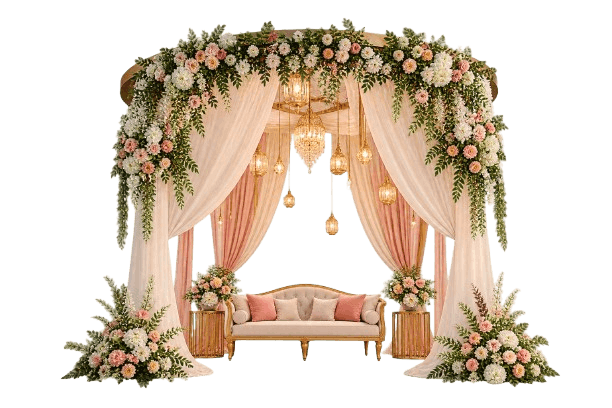
Masehri / Sej Decoration
Masehri and Sej are traditional Pakistani wedding setups that require thoughtful decoration. These are intimate spaces where the bride stays or is prepared during specific parts of the wedding celebration. The decoration for a Masehri or Sej setup needs to feel special and coordinated while working within the practical constraints of the space.
Unlike large venue decoration, Masehri and Sej setups are typically smaller, more contained spaces where the focus is on creating a beautiful, coordinated environment that feels festive and intentional. The decoration should reflect the significance of the occasion while remaining proportional to the available area.
What Masehri and Sej Mean in Pakistani Weddings
Masehri and Sej are traditional customs in Pakistani wedding celebrations. While the exact significance and setup can vary by region and family preference, both involve dedicated spaces where the bride spends time during the wedding events. These spaces deserve professional decoration that feels coordinated with the overall wedding while meeting the specific requirements of the setup.
Because Masehri and Sej setups are separate spaces with their own purpose and atmosphere, the decoration approach differs from the main wedding venue decoration. The focus is on creating a beautiful, personal space that feels intentional and well-coordinated, rather than replicating large-venue design in a smaller space.
Planning the Main Masehri / Sej Setup
The Masehri or Sej setup typically has a focal area, often where the bride sits or is positioned. This focal area becomes the visual centerpiece of the decorated space.
Main Focal Area and Backdrop
The primary backdrop or focal design is positioned to frame the main Masehri or Sej seating or placement area. This might be created using several approaches:
Fabric draping in coordinated colors creates an elegant backdrop. The fabric can be simple and smooth for a modern look, or gathered and layered for a more ornate traditional appearance.
Floral arrangements positioned as the main backdrop element create a natural, celebratory focal point. Flowers can be arranged abundantly for a traditional look or more selectively for a contemporary approach.
Decorative frames or panels combined with fabric and floral elements add structure and visual interest to the focal area.
The main focal design should be proportional to the available wall space and should look intentional from the angles where guests and the bride will view it.
Balance and Proportion
The decoration should be balanced without overwhelming the space. If the Masehri or Sej area is relatively compact, the decoration needs to feel coordinated and beautiful without making the space feel cramped or cluttered.
The positioning of seating or the bride’s placement affects where the backdrop can be positioned and how other decorative elements should be arranged. A well-proportioned design considers how the space will actually be used.
Floral Decoration for Masehri / Sej
Flowers are typically an important part of Masehri and Sej decoration, often used to create the main focal area or to add coordinated accents throughout the space.
Floral Placement and Arrangement
Flowers might be positioned:
- As the primary backdrop or focal element
- In coordinated clusters around the main seating area
- In decorative garlands or hanging arrangements
- On side tables or decorative elements
- Along borders or frames
The placement depends on the available space, where the bride will be positioned, and how elaborate the decoration should be.
Floral Density and Style
Traditional Masehri and Sej decoration often features abundant floral arrangements that create a lush, festive look. Garden-style or loose arrangements create a natural feeling. Structured, formal arrangements create a more refined, controlled look.
The amount of floral work should feel proportional to the space. A small Sej setup might feature strategically placed flowers that create impact without overwhelming the area. A larger setup can accommodate more abundant floral work.
Fresh or Artificial Flowers
Fresh flowers provide natural beauty and fragrance. They work well if the Masehri or Sej setup will be used for a shorter period or if the couple prefers the natural aesthetic.
Artificial flowers maintain their appearance throughout the wedding celebration and allow complete flexibility in color selection. They work equally well whether the bride spends one hour or several hours in the decorated space.
Many setups use a combination, with fresh flowers in the main focal area for maximum visual and olfactory impact, and artificial flowers supporting the design and providing additional fullness or coverage.
Fabric and Draping Details
Fabric is often the foundation of Masehri and Sej decoration, creating the backdrop and adding visual texture and color.
Backdrop Fabric
The fabric used for the main backdrop should coordinate with the wedding’s color scheme. The fabric might be:
- A solid color in one of the wedding colors
- A textured fabric that adds visual interest
- A patterned fabric that incorporates multiple colors
- Layered fabric in coordinating colors
The way the fabric is arranged, whether smooth and sleek, gathered and full, or creatively draped, affects the overall visual effect and the formality of the design.
Additional Draping and Accents
Beyond the main backdrop, additional fabric draping might be used to:
- Create frames or borders around the focal area
- Add texture and visual interest to walls or side areas
- Soften architectural features or create a more contained feel
- Coordinate with the backdrop and create a unified look
The amount and placement of additional draping depend on the space and the overall design approach.
Traditional and Modern Masehri / Sej Styles
The decoration can reflect traditional Pakistani aesthetics, contemporary design, or a blend of both.
Traditional Masehri / Sej Decoration
Traditional setups often feature:
- Rich, warm colors like deep reds, burgundy, golds, or jewel tones
- Abundant floral arrangements
- Ornate decorative elements
- Layered fabric work
- Detailed, ornamental design
- Cultural decorative details
Traditional decoration emphasizes festive abundance and visual richness while maintaining elegance and coordination.
Modern Masehri / Sej Decoration
Modern setups might feature:
- Contemporary color palettes, such as pastels, brights, or minimalist tones
- Strategic floral placement rather than abundance
- Clean lines and simpler backdrop structures
- Carefully chosen decorative elements
- Balanced, uncluttered composition
- Contemporary design aesthetic
Modern decoration achieves visual impact through thoughtful design and quality details rather than ornamentation.
Blended Approach
Many couples prefer a blend of traditional and modern, using traditional colors or cultural decorative elements but with a simpler, more contemporary overall composition. This creates a space that feels rooted in tradition while appearing fresh and intentional.
Choosing Colors and Themes
The color scheme and theme for Masehri and Sej decoration should coordinate with the overall wedding while potentially having its own character.
Color Selection
The colors should work with the wedding’s primary palette. For example, if the wedding is red and gold, the Masehri or Sej might emphasize coordinated shades of red and gold. The colors should appear throughout the space, including the backdrop, floral elements, draping, and any additional styled areas.
Coordinated colors create visual unity and help the space feel intentional and well-planned.
Theme Coordination
The Masehri or Sej theme should echo the wedding’s overall theme or create its own coordinated aesthetic. Some setups reflect traditional Pakistani wedding aesthetics, while others take a contemporary approach.
A clear theme guides decoration decisions and creates a cohesive look.
Designing According to Available Space
The size and configuration of the Masehri or Sej space significantly affect how decoration is planned.
Compact Setups
Smaller spaces require careful proportion. The decoration should be beautiful and coordinated without making the area feel cramped. The focus might be on a well-designed focal backdrop and coordinated but modest additional styling.
Quality details often create more impact in smaller spaces than quantity of decoration.
Larger Setups
Larger areas allow for more extensive decoration, additional focal points, and coordinated styling throughout the space. The challenge is ensuring the decoration feels cohesive rather than scattered.
Working with Existing Features
Existing walls, mirrors, windows, or architectural features affect where decoration can be placed. Good decoration works with these features, enhancing or framing them rather than fighting against them.
Custom Masehri / Sej Decoration
Every Masehri and Sej setup is different and should be customized according to:
- The bride’s personal preferences and style
- The wedding’s color scheme and theme
- The available space and dimensions
- Traditional or modern styling preference
- Floral preferences (fresh, artificial, or combination)
- Decorative material preferences
- Any specific ideas or requests
With clear information about these factors, a decorator can plan a customized setup that feels personal, coordinated, and appropriate for that specific wedding.
Setup, Installation and Final Finishing
Pre-Setup Planning
Before installation, the Masehri or Sej space is assessed to understand dimensions, existing features, walls, ceiling height, and any special considerations. This planning helps identify the best approaches for placement and execution.
Installation Process
Setting up Masehri or Sej decoration typically involves:
- Installing the main backdrop fabric and any structural elements
- Positioning and arranging floral elements
- Adding decorative accents and details
- Ensuring all elements are secure and proportional
- Checking sightlines and visual balance
- Making final adjustments
The installation timeline depends on the design complexity. A simpler setup might be completed in a few hours, while a more elaborate design might take longer.
Final Finishing
The finished Masehri or Sej space should feel beautiful, balanced, and ready for use. Final touches include:
- Ensuring all elements are secure and properly positioned
- Verifying that flowers are fresh and properly hydrated (if using fresh flowers)
- Confirming that the space is comfortable and functional
- Adding small decorative details that complete the overall look
- Final quality check from different angles and perspectives
Factors That Affect Decoration Cost
Several practical factors influence the scope and resources required for Masehri or Sej decoration:
Size of the Setup
The dimensions of the Masehri or Sej space determine how much decoration area needs to be covered.
Floral Selection and Quantity
Fresh flowers, artificial flowers, and the density of floral arrangements affect the resources required and the visual impact.
Backdrop Complexity
A simple backdrop requires less work than a complex design with multiple layers, frames, or ornamental elements.
Fabric and Draping
The amount of fabric draping and the complexity of the draping arrangement affect the setup time and resources.
Decorative Materials
Additional decorative elements, frames, panels, or ornamental pieces add to the scope of work.
Customization
More customized designs and premium material choices affect the resources and setup time.
Installation Requirements
Some spaces may have structural considerations or special requirements that affect setup complexity.
Frequently Asked Questions
What is Masehri / Sej decoration?
Masehri and Sej are traditional Pakistani wedding setups where the bride stays or is prepared during certain wedding events. The decoration creates a beautiful, coordinated, special space for this occasion. The decoration should feel intentional and well-planned while remaining proportional to the available area.
What is included in a Masehri / Sej setup?
Masehri and Sej decoration typically includes a main backdrop or focal design, floral arrangements, fabric or draping, coordinated color scheme, and overall decoration that creates a beautiful, cohesive space. The specific elements depend on space, preferences, and design approach.
Can Masehri decoration be customized?
Yes, completely. The decoration is planned according to the bride’s preferences, the wedding’s colors and theme, the available space, and any specific ideas the couple has. Every setup is customized to that specific space and wedding.
Can fresh flowers be used for Sej decoration?
Yes. Fresh flowers provide natural beauty and fragrance. They work well if the bride will be in the space for a shorter period. They require proper care and may need attention during the wedding.
Can artificial flowers be used?
Yes. Artificial flowers maintain their appearance throughout the wedding day and evening. They work well whether the bride spends one hour or several hours in the decorated space.
How does space affect Masehri decoration?
Space size determines how proportional the decoration needs to be. Smaller setups require careful scaling and selective placement. Larger setups allow for more extensive decoration. In either case, the decoration should feel intentional and balanced for that specific space.
What details should I provide before planning the decoration?
Useful information includes the wedding date, venue location, available area or setup size, preferred colors, any wedding theme, floral preferences (fresh, artificial, or combination), traditional or modern styling preference, and any specific decoration ideas or preferences.
Creating Your Masehri / Sej Space
Masehri and Sej decoration should create a beautiful, special, coordinated space for this important part of the wedding celebration. The decoration should feel intentional and well-planned while working within the practical constraints of the available space.
Professional Masehri and Sej decoration involves understanding the couple’s preferences, assessing the space, planning a customized design that feels coordinated and appropriate, and executing it with attention to detail. The result should be a space that feels beautiful, coordinated with the wedding theme, and right for the specific occasion.
If you’re planning a wedding in Pakistan and want to discuss Masehri or Sej decoration, share your wedding date, venue location, available area or setup size, preferred colors, any wedding theme you have in mind, your floral preferences (fresh, artificial, or combination), and whether you prefer traditional, modern, or blended styling. With these details, we can create a customized Masehri or Sej decoration plan that creates a beautiful, special space for your wedding celebration.