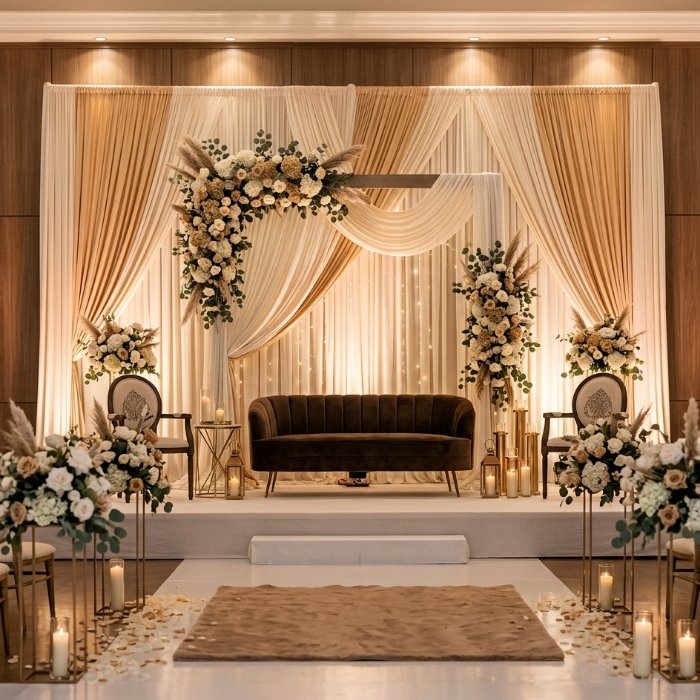
Dholki Decoration
Dholki is a festive, celebratory event that brings together family and close friends for music, dance, and celebration. The decoration for Dholki should reflect this joyful, intimate atmosphere. It’s typically more colorful and lively than some pre-wedding events, while still being thoughtfully planned and coordinated.
Professional Dholki decoration means creating an environment where the celebration feels vibrant and welcoming, the decorated areas are proportional to the space, guests feel comfortable moving and celebrating, and the overall design reflects the couple’s style. The decoration should support the energetic nature of the event while maintaining visual balance and coordination.
Understanding Dholki and Its Decoration Needs
A Dholki is a gathering centered around music, rhythm, and celebration. It’s often smaller and more informal than a full wedding reception, though decoration remains important in creating the right atmosphere. The event typically has a central entertainment or dancing area, guest seating, and spaces where people can move around and socialize.
Dholki decoration differs from other wedding events because it emphasizes the celebratory, festive energy of the occasion. The decoration often uses brighter colors, more playful design elements, and creates an environment that feels lively rather than formal. At the same time, the decoration should be coordinated and professional. It should feel intentional and well-planned, not haphazard or overdone.
Key Areas of Dholki Decoration
Main Stage or Performance Area
Most Dholkis have a focal area where the entertainment or main celebration happens. This might be a raised stage, or simply a designated performance space that serves as the visual center.
The stage backdrop sets the tone for the entire event. It should be proportional to the available wall space and visible from all guest areas. The design might be colorful and festive, incorporating the wedding’s colors or a theme the couple has chosen.
The stage area needs to allow performers or dancers to move comfortably and guests to see clearly from different seating areas. The backdrop should not obstruct sightlines or create visual problems when viewed from various angles.
Entrance and Welcome Area
Guests’ first impression matters. The entrance decoration should immediately communicate the festive nature of the Dholki. This might include colorful floral arrangements, decorative elements in the wedding colors, or simply well-coordinated styling that creates a welcoming feeling.
The entrance should be proportional to the entry space and should guide guests smoothly into the venue without creating bottlenecks or visual confusion.
Seating and Guest Areas
Dholkis often have designated seating areas where guests watch and celebrate. These areas should be comfortable and coordinated with the overall decoration. Table styling, if tables are used, should match the event’s color scheme and theme.
The arrangement of seating affects how guests experience the event and how well they can see the main performance area. The decoration should work with this layout rather than against it.
Dancing and Celebration Space
Unlike some formal events, Dholkis typically have open space for guests to dance and celebrate. The decoration should not impede this space or make guests feel crowded. The overall venue layout should allow comfortable movement and celebration.
Dholki Backdrop and Stage Design
The Dholki stage and its backdrop are the visual focus and should reflect the festive, celebratory nature of the event.
Color and Vibrancy
Dholki decoration often uses the couple’s wedding colors, but typically in a more vibrant, festive way than some other events. If the wedding colors are red and gold, the Dholki might emphasize bright reds and golds with lively accents. If the colors are pastels, the Dholki might use them in a more saturated, energetic way.
The backdrop design might incorporate these colors prominently, creating a backdrop that feels celebratory and supports the festive mood of the event.
Design Approach
Dholki backdrops might incorporate several design elements:
A vibrant fabric backdrop in the wedding colors provides a colorful foundation. The fabric might be plain, or it might feature patterns or textures that add visual interest.
Floral elements can be used generously in Dholki decoration. The abundance of flowers supports the festive mood. Fresh or artificial flowers work equally well, arranged to create fullness and color.
Decorative elements like frames, panels, or ornamental pieces can add visual interest and help define the stage area.
The overall design often feels more relaxed and expressive than some other pre-wedding events, reflecting the more informal, celebratory nature of the Dholki.
Proportion and Scale
The backdrop should still be proportional to the venue size and wall space. A large backdrop can work well in a spacious venue, while a smaller space calls for a more modest design. The key is that the design feels intentional and balanced for that specific space.
The stage position should allow guests to see comfortably from various seating areas. The viewing distance and angles should all be considered when designing the backdrop.
Floral and Decorative Elements for Dholki
Flowers play an important role in Dholki decoration, often used more abundantly than in some other events due to the celebratory nature.
Floral Arrangements and Placement
Floral elements might appear:
- As part of the main backdrop design, creating a focal point of color and texture
- Along the sides of the stage, framing the performance area
- At the entrance, welcoming guests with color and fragrance
- In other areas of the venue, creating visual continuity
- As table centerpieces if tables are part of the setup
The arrangement style might range from lush, abundant designs that fill the backdrop to more targeted placements that add color to specific areas.
Fresh vs. Artificial Flowers
Fresh flowers provide natural beauty and fragrance. They work well if the Dholki is a shorter event or if the couple prefers the natural look and feel.
Artificial flowers allow complete color flexibility and durability throughout the celebration. They stay in good condition even during dancing and movement, and they work well for longer events or if the celebration continues over several hours.
Many Dholkis use a combination, with fresh flowers in focal areas for maximum visual and olfactory impact, while artificial flowers support the design and provide additional fullness where needed.
Color Coordination
Flower colors should work with the Dholki color scheme. If the backdrop is burgundy and gold, flowers might echo these colors or complement them with ivory, blush, or green accents. The overall color coordination helps create a unified, intentional look.
Dholki Themes and Color Selection
Every Dholki has a style, guided by the couple’s preferences and the wedding’s overall theme.
Traditional Dholki Decoration
Traditional Dholkis often use rich, warm colors, such as reds, golds, burgundy, deep oranges, or jewel tones. The decoration might be ornate and detailed, with abundant floral work and decorative elements.
Traditional decoration supports the celebratory, joyful atmosphere while honoring cultural aesthetics. The design often feels warm, welcoming, and festive.
Modern Dholki Decoration
Modern Dholkis might use a more contemporary color palette, such as pastels, blush tones, whites with accent colors, or bold contemporary colors. The design tends toward cleaner lines and more strategic placement of elements rather than maximum ornamentation.
Modern decoration still maintains the celebratory feeling but achieves it through different design choices and color combinations.
Personalized Themes
Many couples choose a specific theme or color concept for their Dholki. The decoration should reflect that theme while maintaining the festive, celebratory atmosphere.
A theme might be based on the couple’s favorite colors, a meaningful concept, or simply an aesthetic they prefer. Whatever the theme, it should guide the decoration choices throughout the venue and create a cohesive, intentional feel.
Dholki Entrance and Venue Styling
The entrance and overall venue decoration should complement the stage and create a coordinated experience for guests.
Entrance Design
The Dholki entrance should feel festive and welcoming. It might feature:
- Colorful floral arrangements that hint at the design inside
- Decorative elements in the wedding colors
- An arch or frame that creates a formal welcome
- Simple, elegant styling that draws guests in
The entrance should be proportional to the walkway and should not block guest flow. It should feel like a transition into a celebration.
Venue Layout and Decoration Distribution
The overall venue decoration should work with the layout. The stage area is typically the main focal point, but the surrounding areas should also feel coordinated and intentional.
Wall decoration, if used, should complement the stage backdrop rather than compete with it. Hanging elements or ceiling decoration, if appropriate for the venue, can add visual interest without overwhelming the space.
Table styling and other decorative elements throughout the venue should use the same color scheme and design direction, creating visual continuity.
Planning Dholki Decoration
Understanding the Event
The decoration planning begins with understanding what the couple wants the Dholki to feel like. Do they prefer traditional or modern styling? Abundant floral work or more restrained design? What colors appeal to them?
A clear vision of the desired atmosphere and style guides all the planning decisions.
Venue Assessment
The venue shapes the entire decoration plan. The decorator needs to understand:
- Available space and dimensions
- Ceiling height and overhead options
- Wall space for backdrop placement
- Where the main celebration area will be
- Guest seating and flow
- Lighting conditions
- Any structural features or limitations
A site assessment identifies opportunities and practical considerations for the design.
Information for Planning
To plan appropriate Dholki decoration, useful information includes:
- Dholki date and time
- Venue location and size
- Expected guest count
- Couple’s color preferences
- Preferred decoration style (traditional, modern, or a blend)
- Floral preferences (fresh, artificial, or mixed)
- Which areas need decoration emphasis
- Any specific themes or concepts
- Any particular requests or preferences
Detailed information helps create a customized plan that works for that specific Dholki.
Customization and Balance
The decoration should be customized to reflect the couple’s preferences while remaining appropriate for a Dholki event. This means:
- Color choices that feel festive and intentional
- Design style that matches their preferences
- Appropriate level of decoration for the venue and event
- Floral elements that create the desired mood
- Layout that supports the celebration and guest comfort
The result should feel coordinated, celebratory, and right for that specific Dholki.
Factors Affecting Dholki Decoration
Several practical factors influence how Dholki decoration is planned and executed:
Venue Size and Guest Count
A larger venue with more guests might accommodate a more substantial stage and backdrop design. Smaller, more intimate Dholkis call for proportionally scaled decoration. The guest count also affects how the space needs to be arranged for comfortable celebration and viewing.
Performance Area Needs
The main stage or celebration area needs sufficient space for performers or dancers to move comfortably. The decoration should not impede this space or create visual problems. The layout should support the dancing and celebration that typically happens at a Dholki.
Ceiling Height and Overhead Space
Ceiling height affects what overhead or hanging decoration is possible. A higher ceiling allows for hanging garlands, suspended floral elements, or draping. Lower ceilings limit these options but don’t prevent beautiful decoration. The design simply needs to be adjusted accordingly.
Available Wall and Floor Space
The wall space available for the stage backdrop determines what backdrop size and design are practical. Floor space affects how much of the venue can be decorated and how guests can move through the space.
Event Duration
A shorter Dholki might use fresh flowers without concerns about maintenance throughout the event. A longer celebration might benefit from artificial flowers, which maintain their appearance regardless of how many hours of dancing and celebration happen.
Decorative Elements Selection
More elaborate designs with abundant floral work, multiple decorative layers, and detailed elements require more setup time and resources. Simpler, more focused designs come together more quickly but still create impact through quality and coordination.
Frequently Asked Questions
How is Dholki decoration different from other wedding events?
Dholki is more celebratory and informal than some other wedding events. The decoration typically uses brighter colors, more abundant floral work, and creates a festive atmosphere that supports dancing and celebration. Other events like Nikah are more formal, while Dholki embraces the joyful, energetic mood of the gathering.
What if we want a simpler Dholki?
Dholki decoration can be simple or elaborate depending on what the couple prefers. A simpler approach might focus on a well-designed backdrop and entrance, with coordinated table styling, rather than decoration throughout every area. The key is that whatever decoration is done should feel intentional and coordinated.
Can Dholki decoration work in a small space?
Yes. Smaller spaces call for proportionally scaled decoration. The focus might be on quality design and good proportion rather than quantity of decoration. A small, well-designed backdrop and coordinated entrance can create a beautiful Dholki atmosphere even in a modest space.
How far in advance should we plan Dholki decoration?
Discussing decoration plans several weeks before the Dholki allows time for planning, design discussion, and material sourcing. The timing depends on how customized or elaborate the design is.
Can we use both fresh and artificial flowers?
Yes, many Dholkis use a combination. Fresh flowers in focal areas create maximum visual and olfactory impact, while artificial flowers fill out the design and provide additional coverage. This approach offers the benefits of both options.
What if the Dholki venue is outdoors?
Outdoor Dholkis can be beautifully decorated with the right planning. Weatherproof materials and structural considerations become important. The decoration might need to account for weather conditions and available infrastructure, but both outdoor and indoor venues can be professionally decorated.
Creating Your Dholki Atmosphere
Dholki decoration should capture the festive, celebratory energy of the event while remaining coordinated and thoughtfully planned. The decoration supports the gathering, creating a beautiful backdrop for celebration, dancing, and joy.
Professional Dholki decoration involves understanding the couple’s preferences, assessing the venue, planning a customized design that feels festive and intentional, and executing it with attention to detail. The result should be a space that feels celebratory, well-decorated, and right for a Dholki event.
If you’re planning a Dholki in Pakistan and want to discuss decoration, share your Dholki date, venue, available space, preferred colors, the style you’re drawn to (traditional, modern, or a blend), your floral preferences, and any specific themes or decoration ideas you have. With these details, we can create a customized Dholki decoration plan that captures the festive mood of your celebration.