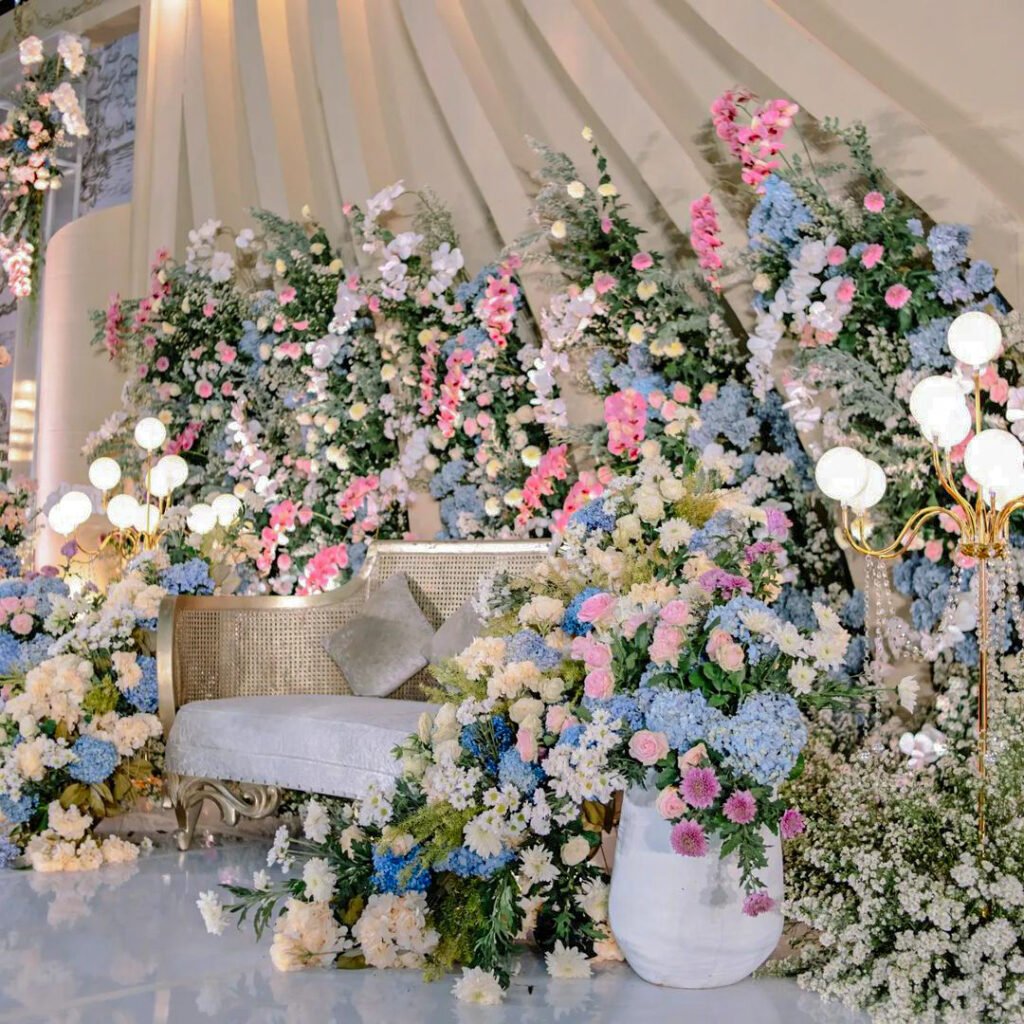
Wedding Decoration
Wedding decoration is more than just adding flowers and fabric to a venue. It’s about creating a complete visual experience that reflects the couple’s style, supports the ceremony and reception flow, and makes guests feel welcomed and celebrated.
Professional wedding decoration involves planning how the entire venue will look, from the moment guests arrive through the final moments of the celebration. This includes the stage and backdrop where the couple will sit, the entrance where guests are welcomed, the seating areas, table styling, and the overall coordination of colors, themes, and decorative elements.
What Wedding Decoration Includes
A complete wedding decoration service typically covers several key areas of your venue:
Stage and Backdrop
The stage and backdrop are usually the focal point of the wedding setup. This is where the couple sits during the ceremony or reception, and it’s often where key moments happen. The stage backdrop can be designed using fabric draping, floral arrangements, decorative frames, or a combination of elements. The design should be proportional to your venue size. A large backdrop may feel overwhelming in a smaller space, while a small design can look out of place in a large hall.
The stage design also needs to consider the ceiling height and available wall space. The positioning of the stage affects how guests move through the venue and where they can see clearly. A well-designed stage becomes the visual anchor that guides the overall decoration style of the entire venue.
Entrance and Welcome Area
Your guests’ first impression happens at the entrance. The decorated entrance sets the tone for the entire event. This might include an entrance arch, decorative frames, floral arrangements, or fabric styling that welcomes guests and hints at the theme or color scheme inside.
The entrance decoration should be proportional to the walkway and entrance space. It needs to guide guest flow without blocking movement. A floral arch or decorative entrance frame serves as both a welcome element and a photo opportunity for guests.
Venue Styling and Layout
Wedding decoration extends throughout the entire venue. This includes:
- Table decoration and styling for the dining area
- Seating area arrangement and coordination
- Wall decoration and backdrop panels if needed
- Ceiling decoration or hanging elements
- Coordinated styling that connects the stage, entrance, and guest areas
The venue layout affects how decoration is arranged. The available floor space, ceiling height, wall dimensions, and guest capacity all influence where elements can be placed and how the overall design comes together. A good decoration layout ensures the venue feels balanced and guests can move comfortably.
Floral Elements
Flowers are a major part of wedding decoration. Fresh flowers and artificial flowers can both be used, depending on your preference, budget, and the duration of the event.
Fresh flowers offer natural beauty and color but require careful selection based on availability and season. Artificial flowers provide consistency and durability, and they can be reused. The floral style, whether arrangements are dense and lush or simple and minimal, affects the overall feel of the decoration.
Floral elements typically appear in the stage backdrop, entrance arch, table centerpieces, and accent areas throughout the venue. The flower colors should coordinate with your overall color scheme. Coordinated floral arrangements using matching colors and styles create a unified look across the venue.
Design Options for Wedding Decoration
Themes and Colors
Every wedding has a style. Some couples prefer traditional decoration with rich colors and ornate details. Others choose modern, minimal styling with clean lines and contemporary elements. Many prefer a blend of traditional elements with a modern twist.
Your wedding theme guides the color palette, decoration style, and types of elements used. A theme might be based on a season, a cultural preference, a favorite color, or a specific aesthetic. The color scheme should work throughout the venue, including the stage backdrop, floral elements, table styling, and accent areas.
Pakistani and Desi wedding decoration often incorporates traditional colors like gold, red, crimson, and deep greens, combined with ornate details and rich floral arrangements. Modern Pakistani wedding decoration may use these same traditional elements but with a simpler, cleaner presentation.
Traditional vs. Modern Styling
Traditional wedding decoration emphasizes ornate details, rich colors, and abundant floral work. Draping, multiple layers of fabric, and elaborate backdrops are common. Every area of the venue is decorated with attention to detail.
Modern wedding decoration tends toward simplicity, clean lines, and strategic focal points. Rather than decorating every surface, modern styling emphasizes quality details in key areas. The color palette is often more restrained, and elements are chosen carefully rather than layered densely.
Elegant wedding decoration balances both approaches. It has refined details and quality materials without excessive ornamentation. The result feels sophisticated and visually balanced.
Floral Decoration and Materials
Flowers can be styled in many ways. Floral arrangements range from loose, garden-style designs to tightly structured pieces. The arrangement style affects how the decoration looks and feels.
Fresh Flower Decoration
Fresh flowers provide natural color and texture. The choice of flowers depends on the season and availability. Fresh flowers require proper handling and may need some maintenance during the event to keep them looking fresh.
Fresh flower decoration works well for smaller, more intimate events or when you want maximum natural beauty. The cost tends to be higher than artificial flowers, and the flowers need to be selected and arranged close to the event date.
Artificial Flower Decoration
Artificial flowers offer consistency and durability. They’re available year-round in virtually any color, allowing complete flexibility in design. Artificial flowers work well for events where you need the decoration to stay in good condition throughout a long celebration.
A mix of fresh and artificial flowers is also common, with fresh flowers used in key areas for visual impact and artificial flowers used to fill out the design and add volume.
Customization and Planning
Every couple’s wedding is different. The decoration should reflect the couple’s preferences, the event type, the venue, and the overall vision for the celebration.
What Affects Your Decoration Design
Several factors shape how your decoration will be planned:
- Venue: The size, ceiling height, wall space, and overall layout
- Guest capacity: How many people will attend affects spacing and layout
- Color preferences: Your favorite colors and how they coordinate
- Floral style: Whether you prefer fresh flowers, artificial flowers, or a combination
- Theme or concept: The overall aesthetic or cultural styling you want
- Available areas: Which parts of the venue need decoration, such as the stage, entrance, and tables
- Event type: Whether it’s a ceremony, reception, or both
- Venue condition: Whether the space is indoors or outdoors affects material choices
Custom Decoration Planning
The decoration planning process begins with understanding your requirements. Useful information to discuss includes:
- Event date and time
- Venue location and size
- Guest count
- Preferred colors or color scheme
- Decoration style, such as traditional, modern, elegant, or simple
- Specific areas that need decoration, such as the stage, entrance, tables, or venue
- Any themes or concepts you have in mind
- Fresh or artificial flower preference
- Budget considerations
With this information, a decorator can plan a customized design that fits your venue, matches your preferences, and works within your requirements.
Design Coordination
A cohesive wedding setup means all the decoration elements work together. The stage, entrance, table styling, and other areas should coordinate in terms of colors, materials, and overall theme. This doesn’t mean everything is identical. It means the elements feel intentional and connected.
For example, the colors used in the stage backdrop should appear in the entrance decoration, floral elements, and table styling. The style should be consistent. If the stage design is traditional and ornate, the entrance and table decoration should follow the same aesthetic.
Planning Your Wedding Decoration
Venue Considerations
The venue shapes the entire decoration plan. A large banquet hall provides different opportunities than a farmhouse or lawn. An indoor venue has different constraints than an outdoor space.
The available space matters when choosing stage size and backdrop style. A large design can make a smaller venue feel crowded, while a very small backdrop may look out of proportion in a large space. The ceiling height affects what types of hanging or overhead decoration are possible. Wall space influences where elements can be positioned.
Guest movement through the venue is also important. The decoration layout should allow comfortable flow. Guests need to move from entrance to seating areas, find facilities, and move between different ceremony or reception spaces.
What the Decorator Needs to Know
Before planning your decoration, the decorator should understand:
- Your vision and preferences
- Your venue’s dimensions and layout
- The style you’re drawn to
- Your color preferences
- Floral preferences, whether fresh, artificial, or mixed
- Which areas need decoration
- Your timeline and event date
- Any practical constraints or requirements
Sharing these details helps the decorator create a design that’s both beautiful and practical for your specific situation.
Installation and Setup
Wedding decoration doesn’t happen by itself. Professional setup involves:
- Pre-event site assessment to understand the space and plan placement
- Preparation of materials and decorative elements
- Installation of the stage, backdrop, and major structural elements
- Placement of floral arrangements and detail elements
- On-site coordination to ensure everything is ready
- Final adjustments and touches before guests arrive
The setup process timing depends on how elaborate the decoration is and how much needs to be installed on the event day. Some elements can be prepared in advance, while final touches happen closer to the event start time.
Frequently Asked Questions
How long does wedding decoration setup take?
Setup time depends on the complexity of the design, the size of the venue, and the number of decorative elements. A simpler design might take a few hours, while an elaborate setup with extensive floral work and multiple areas could take most of the day. The timing is planned according to your event schedule.
Can you decorate both indoor and outdoor venues?
Yes. Indoor venues have different considerations than outdoor spaces, including weather protection, fixed wall and ceiling features, and available infrastructure. Outdoor venues require weatherproof materials and may need additional structural elements. Both can be decorated with the right planning.
What’s the difference between fresh and artificial flowers for wedding decoration?
Fresh flowers offer natural beauty and can be sourced seasonally, but they cost more and need careful handling. Artificial flowers provide consistent color availability, durability throughout a long event, and typically lower cost. Many weddings use a combination, with fresh flowers in focal areas and artificial flowers to add volume and complete the design.
Can the decoration be adjusted according to my budget?
Yes. The decoration can be scaled based on your requirements and budget. This might mean focusing on key areas like the stage and entrance, using a simpler color scheme, or choosing a combination of fresh and artificial flowers. The goal is to create a beautiful, coordinated design within your parameters.
How much advance notice do you need for wedding decoration planning?
It’s best to discuss your decoration plans well in advance, ideally several weeks or months before your event. This allows time for planning, design discussion, material sourcing, and any custom preparations needed. For very elaborate designs, even more advance notice is helpful.
What if the wedding gets postponed or rescheduled?
This should be discussed and agreed upon at the time of booking. Most decoration services can work with you to reschedule if needed, especially if there’s reasonable advance notice. The details depend on the specific situation and agreement.
Planning Your Wedding Decoration
Wedding decoration creates the visual environment for one of the most important days of your life. The right decoration reflects your style, supports the flow of your event, and creates memories for you and your guests.
Professional wedding decoration involves understanding your venue, your preferences, and how to bring everything together into a cohesive, beautiful setup. It’s not just about adding decorative elements. It’s about creating a space that feels intentional, coordinated, and right for your celebration.
To get started with your wedding decoration, share details about your event, including the date, venue, guest count, preferred colors, and overall style. With this information, a professional decorator can create a customized plan that works for your venue, matches your vision, and brings your wedding to life.
If you’re planning a wedding in Pakistan and want to discuss your decoration requirements, we’re here to help plan a beautiful, coordinated setup for your celebration. Share your event details, venue, preferred colors, floral style, and decoration preferences, and let’s create something special for your wedding.